Before markets reopen on Monday, oil traders are already adjusting to the price of a potential supply shock.
Iranian state media confirmed the death of Supreme Leader Ayatollah Ali Khamenei, after US President Donald Trump said he had been killed in US-Israeli strikes.
Over the weekend, prices on IG Group’s retail platform jumped, with WTI trading around $75.33 a barrel, roughly 12% above the prior close, while Brent, which settled Friday at $72.48, is now back in “$100 is plausible” territory if the crisis tightens further.
That matters far beyond energy desks.
If crude holds these gains, consumers can expect higher petrol prices, companies can expect higher transport and input costs, and central banks may have less room to cut rates if inflation re-accelerates.
Hormuz carries the real risk as it is the narrow exit for the Persian Gulf, and a disruption there can ripple across every supply chain that touches fuel.
Also Read: Markets brace for volatility after US launches ‘combat operations’ in Iran
The Hormuz factor: a chokepoint with no easy detour
The immediate market concern is not simply a leadership change in Tehran, but shipping.
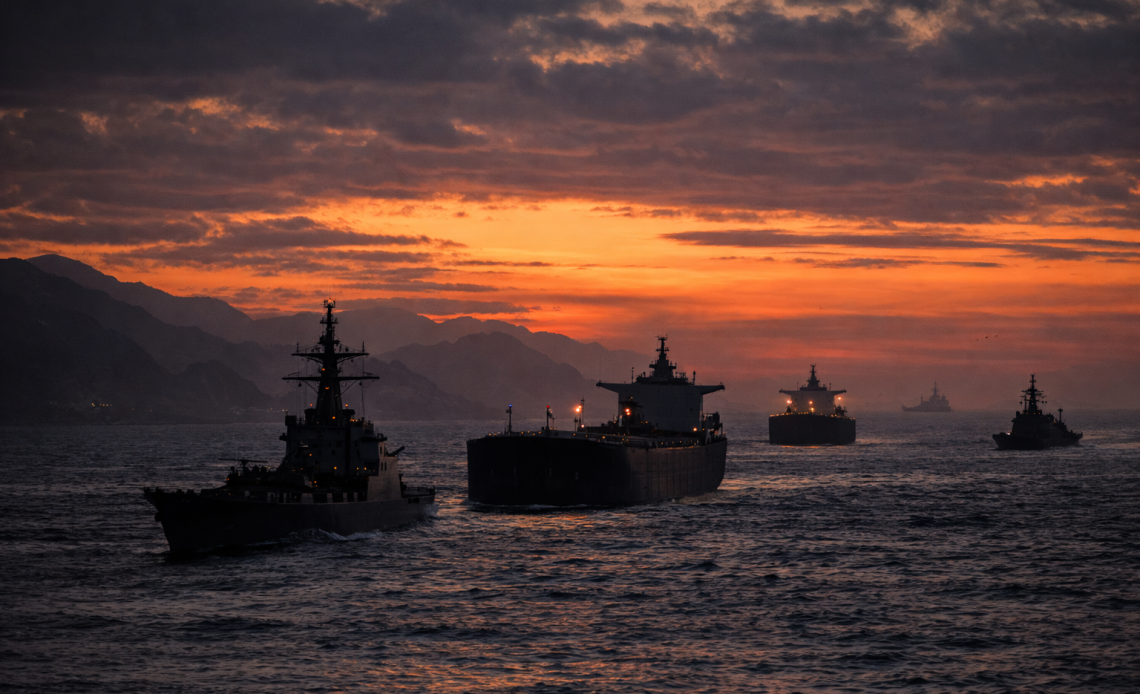
An official from the European Union’s naval mission Aspides told Reuters that vessels have been receiving VHF transmissions from Iran’s Revolutionary Guards saying “no ship is allowed to pass the Strait of Hormuz,” even as Iran has not formally confirmed such an order.
The stakes are enormous because Hormuz is the world’s most important oil transit corridor.
As per estimates, roughly 20 million barrels a day moved through the waterway in 2024, about 20% of global petroleum liquids consumption, and it explicitly flags a Hormuz blockage as the “outlier event” that can drive war premiums sharply higher.
Even if tankers are merely delayed or insurance costs spike, the cost of getting barrels to market rises, and the market tends to charge that risk upfront.
In practical terms, a Hormuz squeeze means refiners bid more aggressively for non-Gulf supply, and shipping routes get longer and more expensive.
Rystad Energy’s Head of Analysis, Jorge León, put the time window clearly:
“The manner in which Tehran reacts within the next 24 to 72 hours, particularly concerning energy infrastructure or regional shipping, will significantly influence short-term oil market trends,” León told Yahoo Finance.
What analysts are saying: $100 is no longer fringe
With futures closed for the weekend, the debate is now about where Brent reopens and how quickly it can gap higher if shipping disruption becomes real rather than rhetorical.
In one widely cited call, Barclays’ energy research team said:
“Considering the potential supply disruption risks, Brent crude prices could spike to the $100 level.”
Other forecasts are more cautious on the immediate move, but still point to upside risk.
Bloomberg Intelligence analysts Will Hares and Salih Yilmaz projected Brent could rise to around $80 per barrel in the near term, while noting $100 becomes thinkable if the conflict spreads.
Barclays has also described a roughly $3–$5 per barrel “risk premium” already embedded in prices amid elevated tensions, a reminder that oil can swing quickly if the market decides the worst-case scenario is less likely.
The problem for investors, though, is that the direction of travel is now being set by geopolitics, not inventories.
Longer-term scenario work also looks less comforting.
The analysts have argued that if Iranian exports were removed for a sustained period, Brent could average $91 a barrel in Q4 2026, and that’s before considering a Hormuz choke.
The bigger picture
A sustained move toward $100 oil tends to show up in household budgets first, then corporate margins, and finally inflation prints.
For policymakers, that sequence can complicate rate-cut plans just as many economies are trying to engineer softer landings.
For now, the cleanest truth is also the simplest: markets reopen Monday, and oil will trade the Strait of Hormuz headline-by-headline.
Whether Brent actually tests $100 will depend less on what traders fear today and more on whether Tehran escalates or signals a path back from the edge in the next few days.
The post Khamenei's death sends oil surging; Brent crude eyes $100 a barrel appeared first on Invezz