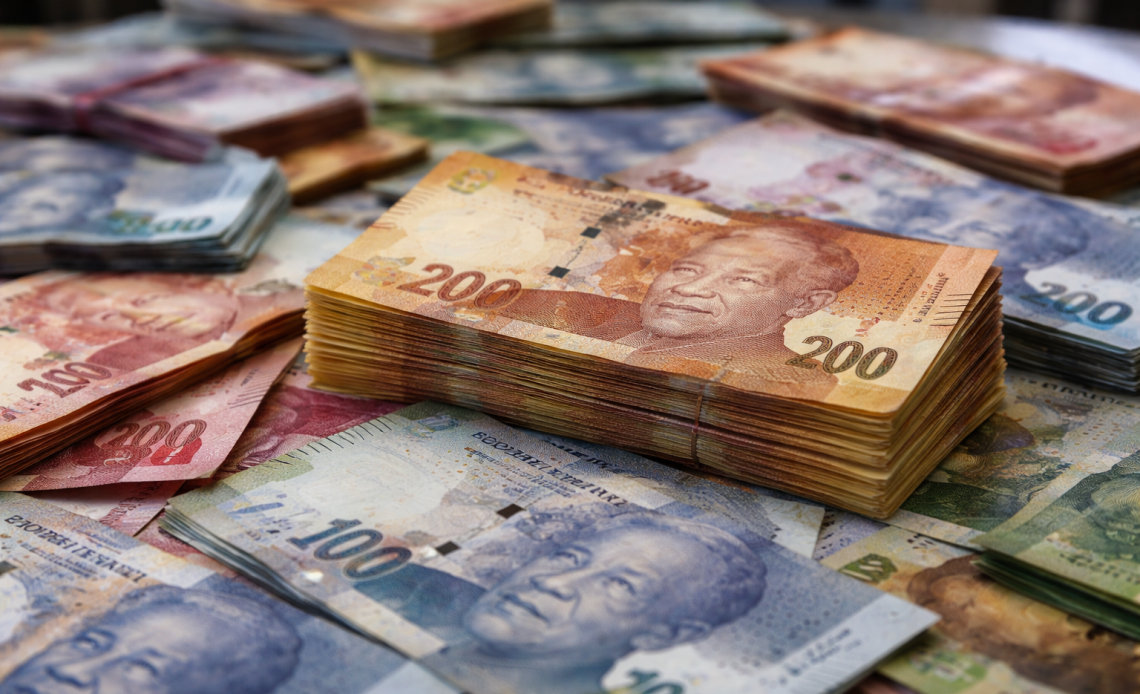
The South African rand has staged a strong comeback this week after the US and Iran’s ceasefire agreement that may ultimately lead to lower oil prices in the country. The USD/ZAR exchange rate plunged to 16.40, down sharply from the year-to-date high of 17.23.
South African rand gained ahead of ceasefire talks
The South African rand, which is often seen as a bellwether for emerging market currencies has made a strong comeback this week.
This rally, which is in line with our recent prediction, accelerated after the US and Iran reached a deal for a ceasefire.
According to the Financial Times, the deal happened after the White House put pressure on Pakistan to press Iran for a two-week pause. This explains why the deal happened in Iran’s terms.
As a result, crude oil prices tumbled but over 15% after the ceasefire was announced as part of the agreement for Iran to reopen the Strait of Hormuz.
There are signs that the ceasefire deal will hold as the two sides meet in Islamabad today. The US team is being led by Vice President JD Vance, Jared Kushner, and Steve Witkoff, while Iran is being represented by the Foreign Affairs minister and the Speaker of parliament.
A sustained ceasefire that leads to the end of the war will be a bullish thing for South Africa, a country that depends on oil from the Middle East. Indeed, data shows that the petrol and diesel prices have jumped in the country during the Iran war, with unleaded petrol going for R23 per liter from R20 in March.
The ceasefire will also lead to a risk-on sentiment among investors as demand for the US dollar falls. The greenback is often seen as a safe-haven asset because of the role of the US dollar in the global economy.
Looking ahead, the next important catalyst for the USD/ZAR pair will come from the United States, where the Bureau of Labor Statistics (BLS) will publish the latest US consumer inflation report on Friday.
Data compiled by TradingEconomics shows that traders expect the upcoming report to show that the headline CPI rose from 2.4% in February to 3.3% in March as gasoline prices soared to $4.
A ceasefire will help to bring gas prices lower, meaning that the March figure will be the peak. Still, analysts warn that inflation will take longer than expected to come back to the Federal Reserve’s target of 2.0%. As such, it will be hard for Federal Reserve officials, including Kevin Warsh to cut interest rates.
USD/ZAR technical analysis
USD/ZAR chart |Source: TradingView
The daily timeframe chart shows that the USD/ZAR shows that the pair has tumbled in the past few weeks, reaching to a low of 16.40, its lowest level since March 12.
It formed a giant rising wedge pattern, which is made up of two ascending and converging trendlines, which neared their confluence.
The pair has dropped below the 50-day and 100-day Exponential Moving Averages (EMA), while the Relative Strength Index (RSI) has moved from the overbought level at 65 to the current 41.
Therefore, the pair will likely continue falling, potentially to the key support level at 16. It may even drop to the year-to-date low of 15.62.
The post USD/ZAR forecast: South African rand surges as rising wedge activates appeared first on Invezz