Indian households face “painfully expensive jewellery bills” this wedding season after a sudden gold duty hike — a move triggered by a $38.5 billion forex reserve drain and raising fears of grey‑market inflows rivaling FY14 highs, warns bullion veteran Prithviraj Kothari.
India’s abrupt hike in gold import duties has landed at the worst possible time, colliding with peak wedding and festival demand.
The measure, aimed at shoring up foreign exchange reserves that have slipped from $728.49 billion to $690 billion in just ten weeks, has instantly inflated jewellery costs and rattled the bullion trade.
Gold, which accounts for nearly one‑tenth of India’s import bill, has become the focal point of emergency balance‑of‑payments management.
Prithviraj Kothari — Managing Director at RiddiSiddhi Bullions Ltd., President of India Bullion and Jewellers Association, and Chairman of Jain International Trade Organisation — is widely regarded as the “Bullion King of India,” making him one of the most authoritative voices on India’s gold industry.
For households, the impact is immediate. “Importing ₹1 lakh worth of gold now attracts ₹15,000 in duty, up from ₹6,000 overnight,” Kothari told Invezz in an exclusive interview.
Heavy bridal sets may give way to lighter jewellery, festive buying will face deferral pressure, and jewellery exchange activity — already accounting for over 40% of some retailers’ sales — will intensify further.
Industry reactions have been swift and divided.
While trade bodies acknowledge the government’s intent, many warn of unintended consequences.
The India Bullion and Jewellers Association (IBJA) fears smuggling could revive at scale, echoing past episodes when higher tariffs drove unofficial inflows of 150–200 tonnes annually.
“Rather than resorting to quantitative restrictions, the Finance Ministry opted for price‑based disincentives that preserve market flexibility and consumer choice — a calibrated, if blunt, emergency BoP response,” Kothari said.
Below are edited excerpts from the interview:
Invezz:How do you assess the government’s rationale behind raising import duties on gold at this point in time?
Prithviraj Kothari: The rationale is defensible but blunt. Forex reserves fell from an all‑time high of $728.49 billion to $690 billion in roughly 10 weeks — a drain of $38.5 billion.
Gold alone accounted for a staggering one‑tenth of India’s entire national import bill. Rather than resorting to quantitative restrictions, the Finance Ministry opted for price‑based disincentives that preserve market flexibility and consumer choice — a calibrated, if blunt, emergency BoP response compounded by West Asia‑driven oil pressure.
Invezz:What immediate reactions are you hearing from bullion traders and jewellers across India?
Prithviraj Kothari: The response from the trade was immediate and split. IBJA national secretary Surendra Mehta acknowledged government intent while flagging that the hike could affect demand as prices were already elevated.
A Mumbai‑based bank bullion dealer warned that grey markets would likely reactivate, as the incentives to bring in gold illegally are high at current price levels. All India Gem And Jewellery Domestic Council has warned that the duty hike will hurt the ₹5 trillion jewellery industry and, perversely, encourage smuggling.
Invezz: How much of an impact will this duty hike have on consumer demand during the upcoming wedding and festival season?
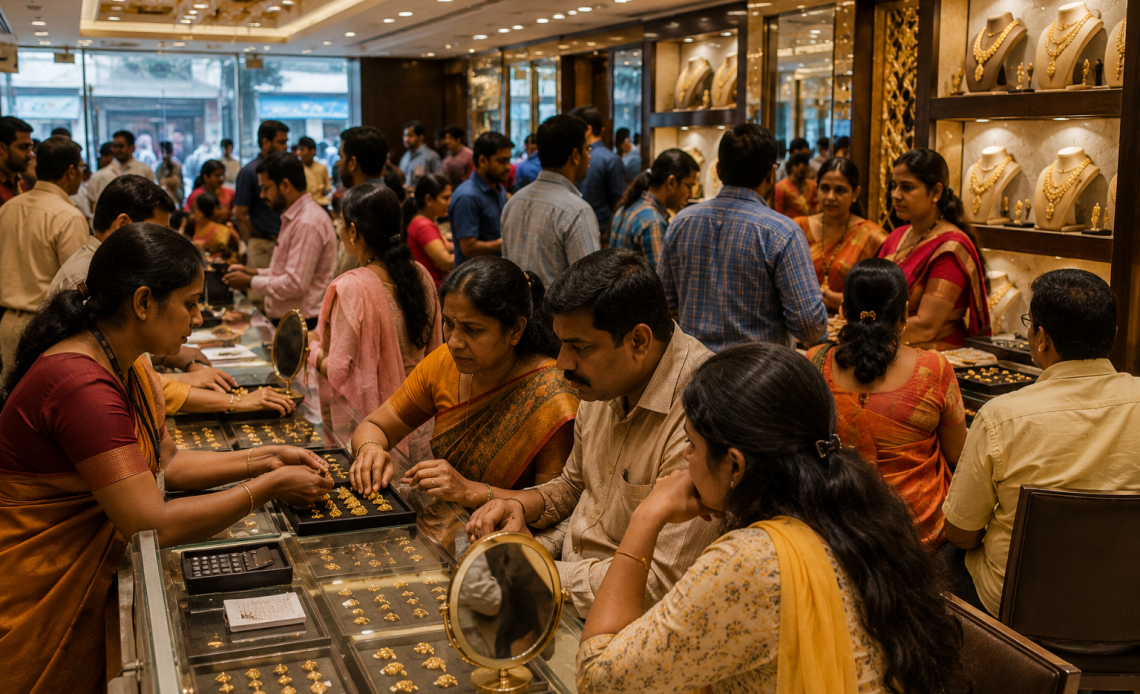
Prithviraj Kothari: With the wedding season already in full swing and Indian households buzzing with festive buying sentiment, the sudden hike could leave consumers facing painfully expensive jewellery bills.
Importing ₹1 trillion worth of gold now attracts ₹15,000 in duty, up from ₹6,000 earlier this week. Heavy bridal sets may give way to lighter jewellery, festive buying will face deferral pressure, and jewellery exchange activity — already accounting for over 40% of some retailers’ sales — will intensify further.
Invezz:What risks do you see for India’s jewellery industry if higher duties persist — especially for small retailers?
Prithviraj Kothari: Exporters now face bank guarantees of ₹2.8 million–3.0 million per kg of duty‑free gold from nominated agencies, severely blocking working capital and stifling exports.
History is instructive, as in 2012, traders went on 13‑day strikes over a far smaller hike, with market sources claiming the industry lost over ₹180 billion in 12 days. Large jewellers like Titan and Kalyan, posting 41–42% year-on-year revenue growth in the third quarter of FY26, have the buffers to absorb the shock — small retailers do not.
Invezz:How might this policy affect India’s position as one of the world’s largest gold importers?
Prithviraj Kothari: India’s structural import dependency is not easily tariff‑elastic. Even as gold prices rose from $76,617 per kg to $99,825 per kg, a rise of 30%, import volumes dipped only 4.76% to 721 tonnes while import value surged 24% to $71.98 billion.
The duty hike will compress marginal discretionary buying but is unlikely to dislodge India’s position. While higher duties could dampen demand, the impact may be offset by a revival in smuggling, which had eased after India reduced tariffs in mid‑2024.
Invezz: How will this move accelerate the shift toward recycled gold and domestic refining capacity?
Prithviraj Kothari: Net recycling in the first quarter of 2026 was 31.2 tonnes, up 20% YoY and 44% quarter‑on‑quarter — even before this duty hike. The World Gold Council’s econometric analysis shows that a 1% increase in gold price pushes recycling up 0.6%.
Gold doré’s share of overall imports has risen from 7% in 2013 to 22%, reflecting domestic refining growth. The revamped gold monetisation scheme enables jewellers to act as collection and purity‑testing centres, which could support a more organised recycling ecosystem.
Invezz:What are IBJA’s latest figures on India’s gold imports and recycling flows, and how do they compare with past duty hike episodes?
Prithviraj Kothari: In the first quarter of 2026, total gold demand rose 10% YoY to 151 tonnes, with investment demand at 82 tonnes outpacing jewellery at 66 tonnes, and bar/coin demand reaching the highest Q1 level since 2013.
India’s gold ETF AUM surged 191% YoY to ₹1.7 trillion, with India accounting for 32% of global ETF demand in Q1. Compared to the 2022 duty episode — when seizures surged 47% to 3,502 kg, and cases rose to 3,982 — the current macro setup implies similar or worse informal inflows, given prices are 30% higher.
Invezz:Do you have estimates of unofficial inflows or smuggling volumes during previous duty hikes, and what baseline should we expect this time?
Prithviraj Kothari: Past duty hike episodes are unambiguous. When India raised duty from 2% to 10% between 2012–13, seizure cases jumped from 503 (FY12) to 2,450 (FY14) to 3,412 (FY15).
Intelligence agencies estimated 50 tonnes smuggled in FY14; the World Gold Council put it at 200 tonnes — both dwarfing seizures of 1.45 tonnes, confirming agencies capture only 1–2% of actual flows.
The 2022 15% duty episode drove seizures up 47% to 3,502 kg. With gold prices now 30% higher and Dubai routing entrenched at $16.5 billion, expect unofficial inflows of 150–200 tonnes annually — rivalling FY14 highs — as the baseline for this cycle.
Invezz:What advice would you give policymakers to balance revenue needs with industry sustainability?
Prithviraj Kothari: Policymakers must move beyond blunt tariff tools. Hiking import duties rarely curbs gold imports — it merely inflates prices, fuels smuggling, and escalates export costs.
A more sustainable framework requires four parallel actions: revamp the Gold Monetisation Scheme to unlock India’s estimated 30,000 tonnes of household gold reserves; promote lower‑caratage 18K and 14K jewellery to reduce imports by 20–30%; relieve exporters of the ₹2.8 million–3.0 million/kg bank guarantee burden crushing MSMEs; and tie the 15% duty to specific forex reserve thresholds to restore planning certainty.
Revenue protection and export competitiveness are not mutually exclusive — but achieving both demands structural reform, not just tariff escalation.
Invezz:Looking ahead, do you foresee further government measures — such as higher duties or restrictions — if demand remains strong despite this hike?
Prithviraj Kothari: Experts fear the government may consider additional measures if external pressures worsen, including further taxation steps or policies aimed at reducing imports.
A 3% Integrated Goods and Services Tax (IGST) on gold imports earlier pushed April imports to a near‑30‑year low — proving the government will layer instruments simultaneously.
Key triggers would be the rupee breaching ₹100 per dollar, crude above $107/bbl, or CAD (current account deficit) widening beyond 1.5% of GDP. A full rollback before the West Asia conflict resolves appears unlikely.
The post Interview: IBJA's Kothari warns gold duty hike to hit weddings, spur smuggling appeared first on Invezz